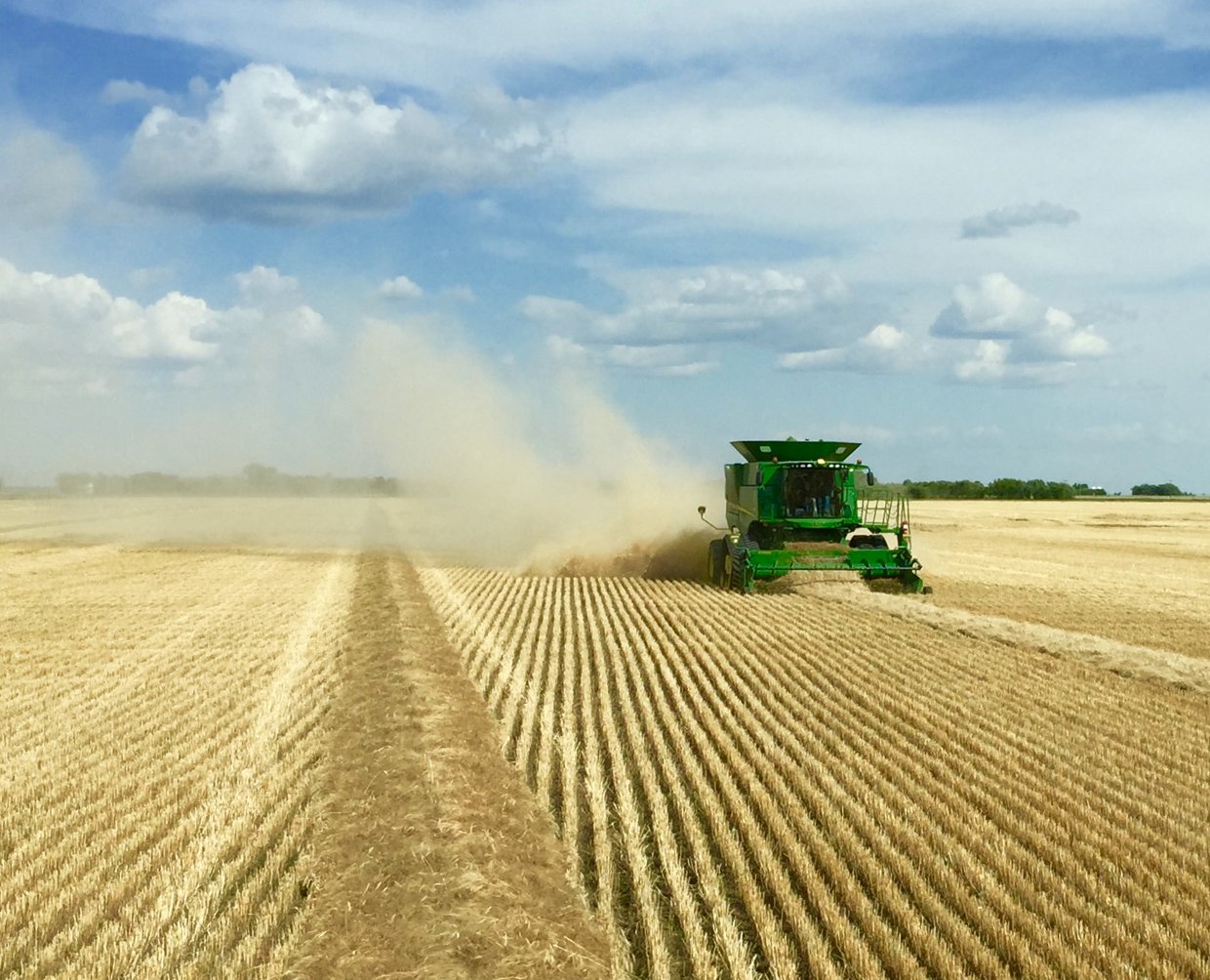
Combine harvesting a wheat field
Commercial Strategy Diagnostic

Where the plan and the drivers disagree.

Every plan rests on a handful of commercial drivers: what you sell, how it reaches the farmer, what you get paid for it, where the money goes next. We establish whether those drivers can carry the goal you committed to, and what the gap is worth where they cannot.

The premise

It starts with the end goal.

Where is this business trying to get to, by when, and who has committed to it. A surprising number of boards and management teams cannot answer that in one sentence. Nothing below can be scored without an answer, because every chapter is measured against whether it gets the company there.

After that the question is mechanical rather than philosophical. A commercial business converts a portfolio into reach, reach into demand, demand into price, and price into cash that can be reallocated.

The diagnostic follows that chain and finds where it breaks.

Most companies can show you the plan. Far fewer can show the evidence that the machine underneath it delivers one.

What it is

An instrument, not an opinion.

Five chapters, twenty-five lines of analysis, a rubric per chapter, and a method for putting a number on what each finding is worth. Run by two people who have operated these businesses rather than only advised them.

FiveChapters
25Lines of analysis
1 to 5Score per chapter
Four weeksTwo people
The five chapters

The order is causal, not alphabetical.

A break early in the chain limits what the later chapters can be worth. A business scoring badly on portfolio cannot be fixed by pricing work, and a strong portfolio behind a broken channel is a different problem from the reverse.

01

Portfolio and Focus

Does your portfolio get you to your goal?

What a winning portfolio needs, against what you have: contribution below gross margin, advantage proven against the real competitor rather than an untreated plot, gaps sized, and a pipeline that moves.

02

Market Access and Channel

How strong is your route to the farmer, really?

A quantified read on coverage and channel strength: coverage against a real denominator, partner performance, gross to net, and what rebate and programme spend actually bought in behaviour.

03

Customer and Demand

Do you know who is worth what, and behave that way?

Segmentation and cost to serve, sell-in against sell-out, demand pull against channel push, and who owns the end user if the largest partner walks.

04

Value Capture

Does reaching the farmer turn into money?

Farmer value per hectare, where price actually comes from, win rate rather than average price, and the leakage between list and cash.

05

Capital Allocation

Do you reinvest like a company that intends to arrive?

The budgeting process itself, the spend split, cost of capability by location, payback on the last three years. The cheapest chapter to run and often the one carrying the largest number.

Shape beats total

Portfolio4
Channel2
Customer3
Value3
Capital4

16 out of 25 is not the finding. The dip at chapter two is. Two companies with the same total are rarely looking at the same problem.

How it is scored

Three readings, kept separate.

Performance, the quality of the evidence behind it, and the money at stake are three different questions. Collapsing them into one number is how diagnostics become opinions.

Performance, 1 to 5

Each chapter carries a written rubric for what a 1, a 3 and a 5 look like, measured against what a business of that type and size should achieve. A 2 or a 4 is an interpolation and has to be argued in writing.

Evidence, A to C

Graded separately from performance. A is verifiable and reconciles to the numbers, B is internal and partial, C is assertion.

A chapter graded C cannot score above 3. A company that cannot show it is winning is not demonstrably winning, and the C is often the more useful finding.

Value at stake

Every finding carries a range, never a point number, with the assumptions written out and confidence marked high, medium or indicative.

Findings are never summed without saying what overlaps.

How the work runs

Four weeks, two people, four movements.

Data before interviews. Reversing that order wastes the interviews, which are the part you cannot repeat.

1Establish

Goal confirmed in writing. Data request out. Interviews weighted towards the people who keep the price list, the trial database, the partner contracts and the customer master, not only head office.

2Analyse

The twenty-five lines run by chapter. Benchmarks applied. Evidence graded as it is found, not assumed at the end.

3Quantify

Findings valued, with assumptions and confidence attached. Sponsor check-in on direction before anything hardens.

4Conclude

Scores set and defended. Overlaps resolved and priorities sequenced. A readout written to be shown to a board without rework.

Two to three channel partners and, where possible, two farmers are interviewed as well. The view from head office is rarely the whole of it.

Deliberately out of scope

What it does not do.

It does not audit. Financial accuracy is assumed. The question is what the numbers mean commercially.

It does not benchmark culture or organisation design. Commercial capability appears only where it explains a commercial result.

It does not implement. The engagement ends with a quantified agenda. Anything further is a separate decision, made with the picture in front of you.

It does not produce a strategy. It establishes what is true, which is the input a strategy needs and rarely has.

What you get

A picture that survives a board meeting.

  • A scored profile across the five chapters, with the evidence grade beside each score
  • A benchmark per chapter, stating what was measured against what
  • Findings with value at stake, as ranges, with assumptions visible
  • A prioritised agenda, sequenced by what limits what
  • The open questions, named rather than buried

Start with the goal, not the proposal.

The first conversation is about where the business is trying to get to and whether anyone has tested that the commercial engine can carry it. Half an hour is usually enough to know whether this is worth running.

Get in touch

Usually bought by a CEO or business unit head whose growth is behind plan, or by a board member of a private equity or venture backed company who needs an unsentimental read on where the upside sits.